Understanding the Local Market
Key Players and Brands
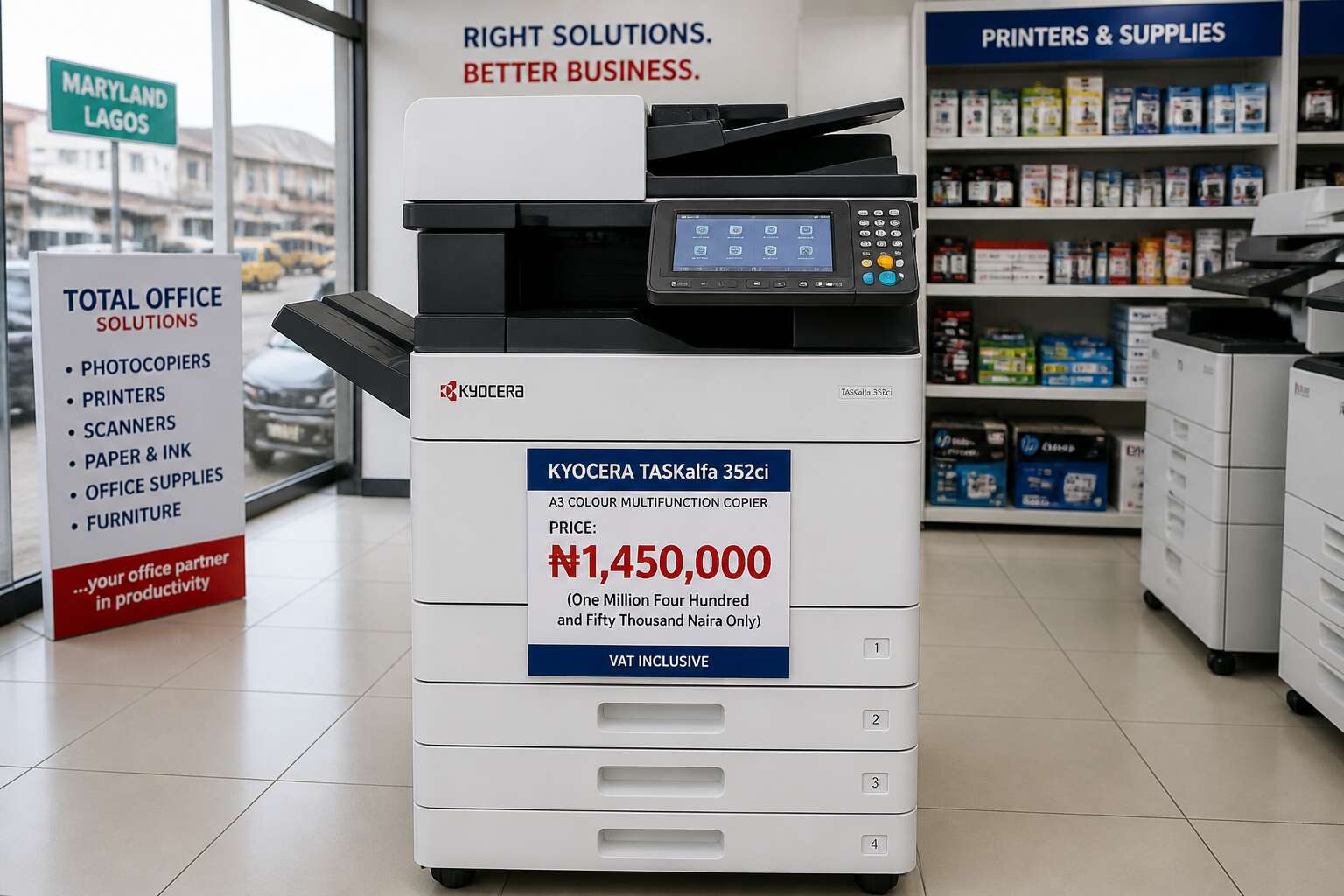
Nigeria’s office equipment market is a labyrinth of parallel imports and authorized dealerships, a fact that directly influences the photocopier price in nigeria. The price you see in Lagos differs wildly from what you might find in Abuja or Port Harcourt, primarily due to the distribution chain and the authenticity of the unit. Most businesses gravitate towards the established heavyweights, and for good reason. These brands offer a semblance of stability in a market often plagued by counterfeit parts and questionable servicing.
The landscape is dominated by a few key names that have stood the test of time. You will often find that the choice of brand is less about preference and more about the availability of spare parts and the proximity of a competent technician.
– Ricoh: Known for its robust build and long lifecycle.
– Konica Minolta: A favorite for high-volume printing environments.
– Canon: Often preferred for its user-friendly interface and color accuracy.
– Kyocera: Recognized for low total cost of ownership due to long-lasting drum units.
The interaction between these global giants and local distributors creates a peculiar pricing structure. A brand new unit from an official source carries a premium, while the same model sourced via a grey market import can be significantly cheaper. However, the latter often lacks warranty coverage, leaving the buyer to shoulder the risk of repairs. This variance in sourcing is the single most critical factor that alters the photocopier price in nigeria on any given day.
New vs Refurbished Machines
Ask any Lagos dealer about the photocopier price in nigeria and he will first ask you a question: new or refurbished? That answer decides everything. The new unit arrives in a crate, with warranty papers that are actually honoured. The refurbished one arrives with a story. It was owned by a church in Italy, a school in Germany, or perhaps a bank that upgraded. No one can verify.
The difference in price is usually forty percent, sometimes more. But the true cost only shows in the first month. I have seen a refurbished Kyocera perform flawlessly for years, and a new Canon seize up on day three. The market thrives on uncertainty. Here is what the old hands watch for:
- The scent of fresh paint on a frame
- Counters that have been cleverly reset
- The dealer’s willingness to put guarantees in writing
These details matter more than any brand badge.
Regional Price Variations
Lagos quotes a photocopier price in Nigeria that seems lean. Kano quotes the same machine at a premium. The gap includes freight, but freight is not the main driver. Dealer density, power reliability, and the distance to the nearest technician determine the final number. I once priced a unit in Ikeja, then saw it sell in Enugu for seventeen percent more.
The regional market resists averages. Where a brand maintains a service hub, prices stay honest. Where it does not, the markup grows in silence.
- Port Harcourt: oil economy demand, thin inventory
- Abuja: procurement cycles, slow movement
- Kano: dealer consolidation, little room to bargain
These regional differences outweigh any discount you will negotiate at the Lagos counter.
Seasonal Demand and Discounts
That Enugu premium taught me something about timing. The photocopier price in Nigeria does not move on a straight line. It breathes with the calendar. Q1 brings a strange quiet, as companies shake off December expenses. Then Q3 arrives, and the scramble begins. Schools buy, banks refresh, and anyone who postponed maintenance now pays for it.
I watch procurement cycles like a hawk. The discounts appear when demand thins out, usually between April and June. That window is your friend. Sellers sit on stock, finance costs climb, and they suddenly remember your phone number.
- First quarter: slow movement, some negotiation room
- Second quarter: the discount sweet spot, dealers want turnover
- Third quarter: demand spikes, prices firm up
- Fourth quarter: budgets expire, urgency kills your leverage
Patience matters more than bargaining skill. A dealer in Abuja once dropped his price by nine percent simply because I waited three weeks. The machine sat there. The rent did not wait. Seasonal demand shapes the photocopier price in Nigeria more than any import duty or exchange rate fluctuation.
Cost Drivers for Photocopiers
Specifications and Speed
The engine inside a machine dictates its baseline value. A 30 page per minute copier differs enormously from a 75 page per minute unit, and Nigerian dealers price that gap accordingly. Print resolution, paper handling, and duplexing capabilities all shape the final figure.
Consider how specifications ripple through ownership:
- Toner yield and cartridge architecture affect consumable expenses
- Drum unit lifespan changes maintenance intervals
- Memory and processor speeds determine how quickly jobs queue
The photocopier price in nigeria climbs sharply when speed meets duty cycle. Machines rated for 100,000 monthly pages command premiums because their components tolerate sustained abuse. Slower units appear cheaper initially, yet their restricted throughput frustrates busy offices. I have watched procurement officers compare quotes and assume identical specs, only to discover one device handled A3 scans natively while the other struggled with software emulation. The photocopier price in nigeria reflects these mechanical realities, whether the buyer recognises them or not.
Functionality: Print, Scan, Fax
A machine that prints, scans, and faxes carries three certification burdens. That tripled load appears directly in the photocopier price in nigeria. A scan-only feature seems trivial until you inspect the optical assembly and image processing board. A fax line requires a modem and phone interface that many modern models omit completely. Entry level copiers often ship with print only, which removes those costs entirely.
- Scan-to-network needs encryption chips and a stable ethernet port
- Fax over IP demands a T.38 gateway for every line
- Simultaneous print and scan requires independent controller paths
Dealers in Lagos raise quotes when these components are present because replacement parts cost more and technician training takes longer. For an office, the true expense emerges over time: each function that fails creates a separate service visit, and the photocopier price in nigeria reflects that ongoing liability.
Volume Capacity and Duty Cycle
Volume capacity and duty cycle determine how much machine you actually buy. A copier rated for 5,000 monthly pages ships with lighter rollers and a simpler fuser. That keeps the photocopier price in nigeria approachable. But run 20,000 pages through it and the drum fails within months. Duty cycle is not a suggestion; it is a contractual limit.
Dealers in Lagos watch these numbers closely. A 50,000 page duty cycle demands reinforced paper paths, larger toner hoppers, and a more robust cooling system. Those components add to the quote. I have seen offices buy a 30,000 page machine and expect 60,000 pages from it. The buyer pays twice: once for the machine, and again for the service visits.
Consider what a higher duty cycle actually buys:
– Thicker gauge metal frames
– Higher temperature fuser rollers
– Separate motors for each roller stage
– Larger waste toner containers
Each item represents a real cost. The photocopier price in nigeria rises with the duty cycle, and the office receives a machine that survives its workload.
Build Quality and Brand Reputation
Two machines can share a price tag and nothing else. The photocopier price in Nigeria rarely reflects what a machine will cost you over five years. Build quality is the hidden variable.
Manufacturers cut costs with polymer gears instead of metal ones. That decision saves money at the factory. It costs you later at the service bench, because polymer gears wear invisibly and then fail without warning.
Brand reputation is a genuine cost driver. Recognized names enforce stricter tolerances across supply chains. Lesser known brands may use similar components, but they test them less rigorously. I have watched buyers save on the initial quote and lose the savings in the first year of service calls.
Several factors shift the final figure:
- Frame construction, from folded steel to welded plates
- Bearing quality in the paper transport system
- Firmware stability and update frequency
- Availability of genuine spare parts locally
Each one adds or subtracts from the true cost of the machine.
Included Accessories and Warranty
Accessories move the photocopier price in nigeria more than most buyers expect. A document feeder, finisher unit, or extra paper cassette can add 15 to 30 percent to the initial quote. That cost rarely appears when comparing base models from different vendors.
Warranty terms are the quieter variable. Three months of cover is common. Twelve months is generous! I have seen warranty conditions that explicitly exclude the very parts that wear out fastest, protecting the seller, not the buyer.
- Delivery and installation are seldom included
- Consumables are almost never covered
- Labour rates for after-hours calls carry their own premium
The final cost compounds these decisions. A low quote with a short warranty and stripped accessory list can outprice a higher quote that includes the full kit and extended cover. The same photocopier price in nigeria can hide a wide gap in value once you weigh accessories and warranty terms.
Price Expectations by Category
Personal and Home-Use Copiers
For the home office warrior or the entrepreneur who prints wedding programs, personal copiers occupy a price tier that confuses many buyers. The photocopier price in Nigeria for this category starts near ₦110,000 for a basic inkjet, but that figure fades once you replace cartridges twice a month. A Brother laser unit demands ₦280,000 upfront, yet it handles your hundredth copy with ease. Your real needs matter. Think about what sits on your desk.
- A4 scanning for school documents
- Wireless printing to appease your phone
- Duplexing, because trees deserve a break
I have watched buyers weep over cheap models that overheat after fifty pages. The photocopier price in Nigeria for home units rarely includes service support, so factor that into your sanity. Many users buy refurbished units, then find drums cost a fortune. Personal copiers reward patience and a budget. Choose for the long week, not the bright demo.
Small Office Machines
Small office machines demand a different mindset. You are buying for a team that will abuse the device. The photocopier price in Nigeria for this category starts near ₦450,000 for a refurbished A3 unit, while a new A3 multifunction with a 50 page per minute engine costs ₦1.5 million. That gap reflects the true workload limit, not speed.
Consider your actual workload. A legal firm prints contracts, a school prints exam papers. I have seen offices buy a cheap desktop unit, then watch it fail on 3,000 copies a month. The real cost is maintenance.
- Drum replacement for a small office A3 costs ₦120,000 to ₦250,000
- Monthly service visits run ₦15,000 to ₦30,000
- Toner for 5,000 pages adds ₦40,000 to consumable costs
The photocopier price in Nigeria for small office machines rarely includes a service agreement, a fact that surprises many buyers.
High-Volume Production Models
The high-volume production tier is where the photocopier price in Nigeria begins to reflect engineering, not just parts. These machines are built for 50,000 to 200,000 copies per month, and their price tags start around ₦3.5 million for a refurbished workhorse. New units from the top three Japanese brands can easily cross ₦12 million, depending on the finishing options. This is the category for commercial print shops and corporate shared services.
What you are paying for is predictability. The cost per copy drops significantly because the drum, fuser, and developer units are designed for marathon sessions. A cheap office machine might deliver a copy for 15 kobo in materials, but a production model can bring that down to 4 kobo when you factor in its longer lifecycle. The ancillary costs also change character at this level.
– Service contracts are almost mandatory, averaging ₦100,000 per quarter
– Consumable kits for 100,000 pages run ₦850,000 to ₦1.4 million
– On-site technician response times drop to under 8 hours
I have seen buyers balk at these figures, yet they are the true cost of ownership. The photocopier price in Nigeria for this tier is an entry fee. The monthly output justifies the spend, but only if your workflow actually demands it. If you are printing 10,000 copies a month, you are paying for a machine that will idle. That idle capacity is a luxury, and the purchase price reflects it. The real savings appear when you track the cost per page over a five year horizon, not the initial invoice.
Multifunction Devices
Multifunction devices bundle printing, scanning, faxing, and copying into one machine. The photocopier price in Nigeria for these hybrids reflects their split personality. A refurbished unit with all four functions will set you back between ₦250,000 and ₦900,000. New units start at ₦1.2 million.
Here is the trap: you pay for four functions, but you likely use two. The fax sits there collecting dust. The scanner runs once a week. Yet maintenance costs treat all modules equally. The photocopier price in Nigeria also varies by speed tier, and that speed tier changes what you should expect:
- 25 pages per minute handles basic office flow.
- 50 pages per minute courts the print shop crowd.
That extra speed doubles the price without doubling your productivity.
Sourcing Options and Deals
Authorized Dealers and Retail Stores
Nobody walks into a Lagos showroom and accepts the first quoted figure when hunting for a photocopier price in nigeria. Authorised dealers publish tidy catalogue prices, but their real arrangements live inside service contracts and delivery schedules. Retail stores across the country operate differently, with every transaction turning into a public negotiation.
I prefer authorised channels when warranty clarity matters. Dealers occasionally offer:
- Demonstration units with minor use
- Bundled starter consumables
- Extended payment terms for registered businesses
Retail markets respond to cash and quick decisions, and their photocopier price in nigeria shifts with currency movements. A Monday visit can differ from a Friday one. Watch the shelf tags, ask about return policies, and retain your notes on quotations. The list figure is a launching point, never the final word in any purchase conversation. Patience tends to reward those who revisit the same seller over several weeks.
Online Marketplaces and E-commerce
Online marketplaces have reshaped how buyers track the photocopier price in nigeria. Unlike showroom counters, these platforms aggregate hundreds of sellers under one search. The same machine can appear at three different figures within minutes. This transparency short-circuits negotiation theatrics.
Yet online pricing carries its own complications. Sellers listing on e-commerce portals often quote artificially low to win clicks, then revise after contact. Genuine deals surface on discontinued models, but delivery charges and handling fees wait until checkout to reveal themselves.
- Seller history and the depth of customer responses, not just star counts
- Warranty language buried in the product description
- The distance between advertised price and final delivery cost
The photocopier price in nigeria on these platforms moves with inventory levels, exchange rate swings, and seller urgency. A listing stays valid only until the seller updates it.
Auctions and Liquidation Sales
I have attended liquidation sales where the bidding paused on a three-year-old copier that still had its plastic wrap! Auctions and liquidation sales offer a different route to finding a photocopier price in nigeria. These events emerge from office closures, bank repossession, or corporate upgrades. For buyers who can inspect the machine before bidding, the savings can be substantial. The empty showroom drama disappears entirely.
What should you expect at a liquidation sale? The stock is often mixed, with some units barely used and others nearing the end of their duty cycle. Auction houses rarely allow meaningful testing. The photocopier price in nigeria at these venues is driven by the crowd in the room, not a manufacturer’s list. For one person, that creates opportunity. For another, it invites risk.
A practical list for auction hunting:
- Confirm the model’s availability for parts before bidding
- Check the meter reading for the printed volume
- Account for transportation from the auction site to your location
That last line is critical. The winning bid is never the final figure, and the gap between them can erase any perceived discount.
Refurbished and Second-hand Markets
Refurbished machines occupy a curious middle ground. A certified refurbisher strips a copier down to its frame, replaces worn rollers, and installs fresh firmware. The resulting photocopier price in nigeria can sit forty percent below retail, yet the machine often carries a warranty that rivals a new unit. Independent sellers offer even lower figures, but their stock comes with no promises beyond the handshake. The difference is accountability. A refurbisher stakes its reputation on the rebuild; a second-hand dealer stakes only the condition of the unit on the day. For a buyer tracking the photocopier price in nigeria, the real work begins before any cash changes hands. Ask for the service history. Confirm the total counter reading. Check whether the seller has access to original parts.
Bulk Purchasing and Corporate Discounts
Bulk purchasing changes the calculation entirely. When an organization commits to acquiring multiple units in a single transaction, the photocopier price in nigeria begins to shift. Dealers often maintain separate margin structures for volume orders, and those margins are thinner. The buyer gains leverage. Asking for a quote on ten machines instead of one reveals a different pricing layer.
Corporate discounts are not automatic. They require negotiation and proof that the organization will remain a repeat customer. Service contracts, maintenance schedules, and consumable supply agreements can be bundled into the offer. This approach allows the buyer to benchmark the photocopier price in nigeria against the total cost of ownership over three years.
Some suppliers offer tiered incentives for larger fleets:
– Free delivery and installation for orders above five units.
– Extended warranty periods at no additional charge.
– Priority technical support with dedicated account managers.
Each tier shifts the overall cost structure downward. For finance departments, the unit price matters less than the aggregate spend across the entire inventory.
Hidden Costs and Total Cost of Ownership
Consumables: Toner and Drums
The sticker price on a photocopier in Lagos or Johannesburg is often the least expensive part of the entire affair. The real financial commitment begins when that first toner cartridge runs dry, which always happens at the most inconvenient moment. Consumables are the recurring heartbeat of your machine, and they demand a steady flow of cash to keep the printing pulse going.
Toner and drums are where the true total cost of ownership reveals itself. You might secure a fantastic deal on a machine, but the replacement cartridges can cost a significant fraction of the initial purchase price. This is especially true for high-yield models that promise lower cost per page but require a hefty upfront sum for their larger reservoirs. Drum units, which are often separate from the toner, have a longer lifespan but will eventually need replacing, and their cost can be a nasty surprise.
When you compare the ongoing expense of consumables against the initial photocopier price in nigeria, the picture becomes clear. A cheap machine with expensive proprietary cartridges will bleed you dry over two years. Conversely, a slightly pricier device that uses widely available toner is often the smarter investment.
– OEM Cartridges: They are pricey but offer consistent quality and protect your warranty.
– Compatible Toners: A cheaper alternative that works in many machines, though quality can vary wildly.
– Refilled Cartridges: An economical choice, but you risk potential damage and mess.
The smart buyer calculates the cost per page before negotiating the purchase. They look beyond the machine’s price tag and investigate the long-term expense of keeping it fed. Ignoring this factor is how a “great deal” transforms into a monthly financial headache. Ultimately, the consumables market dictates the real cost of your copying operation, far more than the initial photocopier price in nigeria.
Maintenance Contracts and Service Fees
Even the most carefully negotiated photocopier price in Nigeria leaves room for surprises. A machine that seemed affordable can generate monthly service invoices that rival your office internet bill. Maintenance contracts reveal the fine print.
The real question is what your contract covers.
- Parts replacement for worn rollers and fuser units
- Labour charges for on-site callouts
- Annual servicing and cleaning intervals
- Emergency repairs outside business hours
Some vendors bundle these into one flat fee, while others charge per visit. The latter approach feels manageable until a paper jam damages internal components, and suddenly you are paying for an engineer’s transport, time, and replacement parts separately.
Your photocopier price in Nigeria is a starting number. The maintenance agreement determines whether that number holds steady or grows every quarter. A breakdown without coverage turns a minor fix into a major line item.
Power Consumption and Efficiency
Power draw rarely features in the initial photocopier price in Nigeria. That is a mistake. I have watched offices choose the cheapest machine, then watch their generator fuel bill climb every quarter. A high volume machine running eight hours a day can consume more electricity than three refrigerators. In a country where mains power is unreliable and generators hum in the background, that consumption is a recurring cost.
Efficiency is built, not configured. Newer models warm up in seconds and sip power on standby. Older units, often cheaper upfront, keep the heating element alive all day. The difference across a five year lease is substantial.
- A typical A3 copier pulls 1.2 to 1.5 kW per hour
- Standby power can inflate your bill by 30%
- Generator fuel doubles the effective cost per page
So when you compare photocopier price in Nigeria, ask for the energy rating. The sticker price buys the machine. The electricity bill pays for its life.
Financing and Interest Charges
Equipment finance houses in Nigeria operate at 25 to 30 percent annual interest. A 950,000 naira copier on a 36 month plan approaches 1.4 million naira when the agreement reaches maturity. The extra 450,000 naira rarely appears on any marketing brochure. That difference, hidden inside interest charges, defines the total cost of ownership more than any feature set.
- The quoted photocopier price in Nigeria is often 10 percent higher under vendor financing than cash.
- Late installment penalties compound at separate, higher rates.
- Maintenance packages attached to finance agreements add hidden costs.
- Accessories can be financed, shifting focus from the duty cycle to the repayment term.
A low ticket value counts for little when commission, administration fees, and insurance clauses live inside each monthly figure. The photocopier price in Nigeria does not finish costing when the receipt prints. The payment schedule owns it first.
Negotiation and Smart Buying Strategies
Comparative Quotations
One buyer I met in Lagos collected seven quotations for the same Ricoh model. The photocopier price in nigeria swung by nearly a quarter between the highest and lowest offers. That gap was not about quality. It was about which dealer had stock sitting idle and which one needed to move units before month end.
When you request comparative quotations, be explicit about your monthly volume and the accessories you expect. Dealers price differently when they know you are comparing. I always ask for a written breakdown of what every quote covers.
- Compare the same model and specification from at least three dealers.
- Ask for quotes valid for seven days.
- Confirm whether installation and the first toner cartridge are included.
Negotiation works best when you show a rival quotation without bluffing. A dealer who sees a better photocopier price in nigeria from a competitor will often match it to win the cash purchase.
Timing Your Purchase
Timing your purchase is an art that dealers understand better than most buyers. The best photocopier price in Nigeria often appears in the final week of a quarter, when sales teams stare down their targets. I have seen the same machine drop in price simply because a dealer needed to clear a container before the next shipment arrived.
Here is what works when the calendar is on your side:
– Buy between the 20th and the last day of the month, when managers approve discounts faster.
– Watch for model refreshes, when older stock moves at cost.
– Ask about floor models that have light usage.
A patient buyer who waits for these windows often pays a lower photocopier price in Nigeria than someone who walks in on the first of the month, when pressure is low and margins are healthy.
Bundling Services and Supplies
Negotiation is where the photocopier price in Nigeria bends to your will. I have watched buyers quote a rival dealer’s offer and let the silence stretch until the manager matched it. Bundle your toner, drums, and a service contract into one conversation. The machine is only the opening bid. The real cost hides in what follows.
Consider what you can fold into the deal:
- A year of maintenance visits
- Genuine toner cartridges for the first six months
- Free delivery and installation
- A buyback clause on your old machine
Dealers would rather shave the photocopier price in Nigeria than lose consumables revenue. Every item you negotiate separately becomes a profit center for them. Ask for the bundle price, then negotiate the machine as if the extras barely exist. That inversion works. When the quotation arrives, look for what is missing rather than what is included.
Leveraging Trade-ins
Your old machine is not a relic. It is leverage. When you offer a dealer your existing copier as a trade in, you transform a passive asset into a discount on the photocopier price in Nigeria. Dealers often refurbish returned machines for the secondary market, which means your worn unit carries real monetary value to them.
I have seen buyers focus solely on the sticker price and miss this entirely. They haggle for hours yet never mention the equipment gathering dust in the storage room. A trade in shifts the conversation. Instead of asking a dealer to reduce their margin, you are offering them inventory they can resell.
- Get a written valuation of your old machine before discussing the new one
- Use that figure to anchor the negotiation for the photocopier price in Nigeria
- Ask how the trade in credit affects your warranty terms
The psychology is straightforward. Dealers chase recurring revenue, and a trade in sweetens the agreement without touching the quoted figure for the new device. When you frame the transaction as a swap rather than a purchase, both sides walk away with something useful.
Warranty and After-Sales Support
A warranty is not a formality. It is the final safeguard between your operation and the unpredictable costs of downtime. Many buyers in Lagos or Johannesburg fixate on the upfront photocopier price in Nigeria, yet they ignore the fine print that dictates what happens after the sale. A dealer who offers a low price but a skeletal support structure will cost you more in the long run. The real test is how they respond when the drum fails or the paper feed jams.
Negotiation extends beyond the initial quote. The moment you show technical awareness, the conversation shifts. Mention the cost of a service visit and the availability of spare parts. These factors often influence the dealer’s willingness to adjust the terms. You can secure a better deal by asking for an extended trial period or a bundled maintenance schedule.
– Verify the response time for on-site repairs.
– Confirm whether the warranty covers consumables like toner.
– Request a list of certified technicians in your region.
After-sales support determines the lifespan of your machine. A robust support network reduces the total cost of ownership, which matters more than the photocopier price in Nigeria. Smart buyers evaluate the dealer’s logistics, their stock of components, and their commitment to keeping your workflow running.

0 Comments