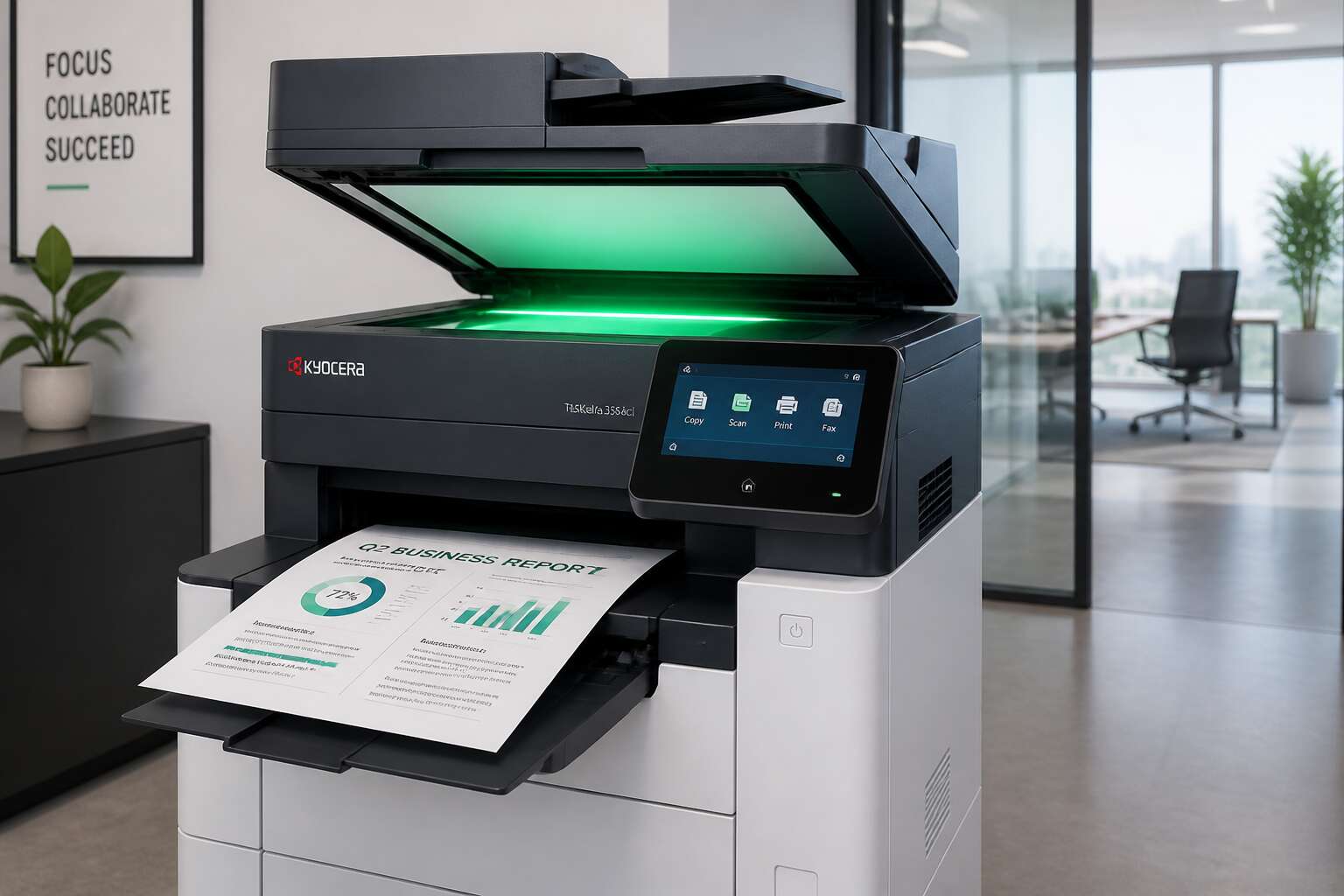
Understanding the Photocopier
In 1938, Chester Carlson used a zinc plate coated in sulfur to create an image. That experiment started modern office copying. Yet for many people, photocopier kya hai remains a mystery. The answer involves light and static electricity.
When you place a document on the glass, a lamp scans its surface. Where ink appears, light reflects differently; dark areas hold electrical charge on a drum. Toner, a fine powder, sticks to those charged zones. Then the drum transfers the powder to paper, and heat fuses it permanently.
Perhaps you have noticed the warm smell in a busy copy room. I still remember that warmth. A photocopier does not simply replicate marks; it captures the image of your original, turning light patterns into solid copies.
Different Types of Photocopiers
The real question, photocopier kya hai, rarely gets a detailed answer. For offices in Johannesburg or Cape Town, it’s often just a box that jams. But the mechanics differ sharply, and that matters!
Here is the breakdown of what sits in your corner:
- Laser photocopiers dominate corporate spaces for their speed.
- Inkjet models handle lighter workloads with better colour output.
- Digital multifunction printers scan, print, and fax in one unit.
Laser machines use static electricity to fuse toner. Inkjets spray tiny droplets. I’ve seen businesses buy a heavy-duty laser for simple documents, then struggle with photo prints. Many SA companies chase the cheapest upfront price, ignoring the real cost of servicing. Analog copiers are nearly extinct now. Understanding these distinctions prevents costly mistakes. The choice defines your monthly overheads. So when someone asks about that, the better answer is a discussion about toner versus liquid ink.
Core Components of a Photocopier
Core of a photocopier lies in its photoconductive drum, a cylinder that holds an electrostatic charge in darkness. When light strikes it, the charge dissipates, creating a latent image. That image then attracts toner particles.
The main components you must understand are:
– The drum, usually made of selenium or organic photoconductors.
– The toner cartridge, which contains the dry ink powder.
– The fuser assembly, which heats and melts the toner onto the paper.
– The corona wires or charge rollers, which apply static electricity.
The fuser often uses heated rollers and a pressure pad to permanently bond the toner. The optic system uses mirrors and a lens to project the original onto the drum. Without these, the machine fails. I’ve seen many machines fail because the corona wires were dirty. Understanding this explains photocopier kya hai in practical terms.
Why Businesses and Schools Rely on Photocopiers
Ever wondered what a photocopier kya hai? For many South Africans, it is the machine that quietly produces exam papers and contracts. Businesses and schools rely on photocopiers because they deliver fast, dependable copies without needing a computer.
Think about the daily tasks a copier handles:
– Printing attendance registers
– Copying ID documents
– Producing worksheets for a full class
Each job takes seconds, not minutes. A teacher needs forty worksheets before the bell rings. A clerk needs a duplicate contract while a client waits. The photocopier answers. It also scans, prints, and emails, saving time. Most models handle heavy workloads without jamming. That durability matters in busy environments. Load shedding? A good copier with a UPS keeps going. The photocopier kya hai mystery disappears once you see how essential it is. Simple, sturdy, and always ready.
Selecting the Ideal Photocopier for Your Needs
Photocopier kya hai? I have asked this in South African boardrooms. The answer often reveals hidden priorities. The machine is a critical component of your document flow, yet most managers ignore it until frustration builds.
Selecting the ideal photocopier means confronting your actual workload, not an imagined one. Volume, speed, and durability form the triad. Consider these factors:
- Average monthly output
- Peak demand during financial year-end
- Service availability in your region
These factors decide whether your purchase becomes a tool or a burden. I have seen offices spend on advanced features while ignoring daily paper jams. That is a choice about competence.
Keeping Your Photocopier in Top Condition
A neglected machine costs more than paper. In my years of servicing offices, I have seen dust and jammed staples damage delicate rollers. The core issue is simple: clean your copier regularly, not only when streaks appear. You might wonder photocopier kya hai in practical terms. It is a precision instrument with hundreds of moving parts. Once you grasp what photocopier kya hai involves, maintenance becomes instinctive.
Here is what I recommend checking each week:
- Wipe the glass with a lint free cloth to prevent shadowy copies.
- Clear paper dust from the feed tray using a soft brush.
- Inspect the fuser unit for burnt residue.
These small actions extend the life of your machine. A dusty sensor can cause misfeeds that stop your whole workflow. So take five minutes every Friday. Your future self will thank you!

0 Comments